No. If a guest found you through Airbnb, Airbnb's rules do not let you ask or encourage that guest to book with you outside Airbnb. This applies to the booking they have now, to a future booking and to a repeat booking.
That is the short answer. The rest of this guide shows the exact wording, what else the rules ban, what the rules do not cover, and what Airbnb can do if a host breaks them. We read the Airbnb help pages on 2026-10-20. Airbnb can change its pages, so check them again before you act.
What the policy says
The rule sits in Airbnb's Off-Platform and Fee Transparency Policy. It says hosts may not ask or encourage users to move "current, future or repeat bookings (including reservation extensions)" off Airbnb. It also says that every message to a guest before the booking must stay on Airbnb. Source: Airbnb Off-Platform and Fee Transparency Policy.
Airbnb's Terms of Service say the same thing in one line: "Do not request, make or accept a booking or any payment outside of the Airbnb Platform." Source: Airbnb Terms of Service, section 11.1.
What hosts may not do
From the policy and the terms, these actions are banned:
- Asking a guest to book outside Airbnb, now or later.
- Offering a discount for booking outside Airbnb.
- Putting links in a listing or a message that take people off Airbnb.
- Asking a guest for contact details before the booking, or asking for an email address, a postal address or another way to reach them.
- Using guest contact details for marketing.
- Asking a guest to review a stay on a website that is not Airbnb.
- Asking for or taking a payment outside Airbnb, except in the narrow cases that Airbnb lists, such as some taxes that Airbnb does not collect.
- Cancelling a reservation so that you can rebook it off Airbnb.
One more detail helps. Airbnb says it does not share a host's or guest's email or phone number before a booking is confirmed (Airbnb Help Center). So the first contact you have with a guest is on Airbnb, and the policy asks you to keep it there.
What happens if you break the rules
Airbnb states that for "repeated or severe violations" it may suspend or permanently deactivate a user's listings or account. It also says it enforces its terms at its sole discretion.
That sentence matters for a small owner. For many hosts, Airbnb is the main source of bookings. One message to one guest may seem harmless. But if Airbnb closes your account, you lose the listing, the reviews and the calendar that fills it.
Guests lose something too. Airbnb says that a guest who pays outside the platform gives up AirCover, its booking protection. A request to pay by bank transfer may also point to a scam, so many guests are careful. Source: Paying and communicating through Airbnb.
What the rules do not cover
The policy says nothing about three things:
- Owning a website for your property.
- A guest who finds your website on their own, for example by searching for your property's name.
- People who have never booked through Airbnb, such as friends, family and neighbors.
Airbnb also does not name "past guests" as a group. The closest wording is "repeat bookings", and the policy bans asking or encouraging those to move off Airbnb.
So the line is about what you do, not about what exists. Owning a site is one thing. Using Airbnb's messages, listing or guest list to send people to it is another. We are not lawyers, and Airbnb decides how it applies its own rules. If you have a case you are not sure about, write to Airbnb support and keep the answer.
Why hosts still do it
The reason is the fee. Under Airbnb's single-fee plan, most hosts pay 15.5%, and the rest typically pay 14% to 16%. Under the split-fee plan, most hosts pay 3%, and the guest pays a service fee of 14.1% to 16.5%. Source: Airbnb service fees.
For a guest who comes back every summer, that fee feels unfair. We understand that. But the risk is out of proportion. You could save one fee and lose the account that brings you most of your bookings.
What to do instead
You can still build a second way for people to find you. Keep it apart from your Airbnb listing.
- Use the same property name on your listing, your website and your social pages. Some guests will search for it.
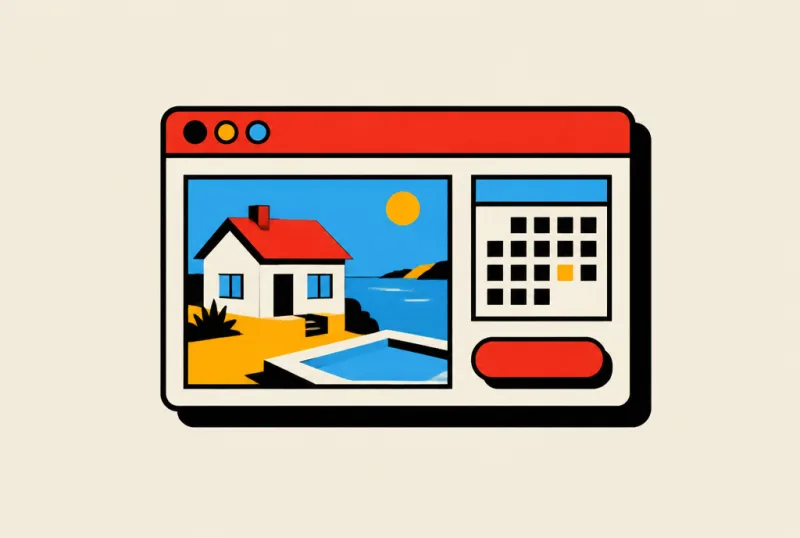
- Build a booking website with your own web address, a live calendar, the full price and a Book button. We build these, and you can read how on our vacation rental booking websites page. Our holiday-let website checklist lists what such a site needs.
- Tell people who know you about it: family, friends, neighbors and guests who stayed with you before you used Airbnb.
- Post on your own public social pages, where anyone can see.
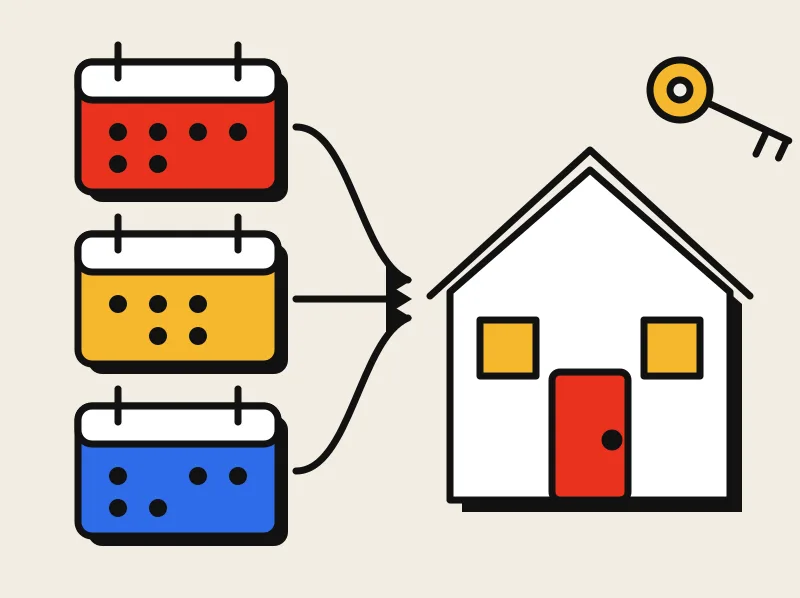
- Keep your Airbnb listing, and connect its calendar to your website, so that a booking on one site closes the dates on the other.
Calendar sync runs on a schedule, not in the same second. So a short gap can exist, and nobody can promise that a double booking will never happen. A good setup makes it less likely and warns you if the sync stops.
Our guide How to get direct bookings instead of Airbnb explains each step. If you are still deciding what a website should include, read Holiday let website: what it needs.
Questions hosts ask
Can I put my website in my Airbnb profile?
The policy bans links in listings or messages that take people off Airbnb. We advise you not to put your website there. Ask Airbnb support if you want a ruling for your own account.
Can I give a guest a business card at the house?
The policy does not mention business cards. The ban covers asking or encouraging a guest to move a current, future or repeat booking off Airbnb. A card that says "book direct next time" fits that wording. We advise you not to do it.
Can I invite guests who booked with me before Airbnb?
Those people are not Airbnb guests, so the Airbnb policy does not apply to them. Contact them as you would any friend or past customer.
Do Vrbo and Booking.com have the same rules?
We did not check them for this guide. Each platform has its own terms, so read them before you contact guests who came from those sites.
Where to start
Do not ask your Airbnb guests to book direct. Build the place where other people can book you instead.
If you want to see what your own booking page could look like, send us your Airbnb, Vrbo or Booking.com listing link. We will reply with a mockup of your own booking page. It is free. Get my free mockup